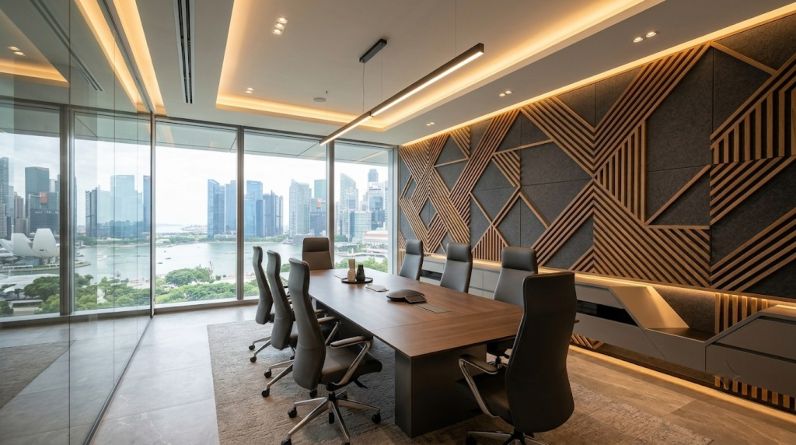
Step into almost any newly renovated workspace across Marina Bay, Raffles Place, or One-North, and you will notice the exact same architectural trend. Sleek floor-to-ceiling glass partitions, polished concrete floors, and exposed industrial ceilings look incredible in client pitch decks, yet they turn ordinary conversations into an exhausting wall of echo. Installing a custom acoustic panel wall solves that hidden design flaw without sacrificing a single inch of modern visual appeal. When your team struggles to hear colleagues over ringing phones and bouncing voices, mental fatigue sets in before lunchtime. A thoughtfully engineered acoustic panel wall captures stray sound waves right where they reflect, turning chaotic open offices into calm, focused environments where people actually enjoy working.
Key Takeaways
- Echo Control Beats Raw Volume: Acoustic panels do not block external MRT or traffic noise, which requires structural soundproofing. Instead, they absorb internal reverberation so speech stays crisp and rooms feel noticeably quieter.
- Glass and Concrete Amplify Noise: Modern Singapore offices rely heavily on reflective materials like tempered glass, bare plaster, and vinyl or stone flooring, causing sound waves to bounce endlessly across workstations.
- Custom Finishes Double as Brand Architecture: Today’s fluted wood slat panels, PET felt panels, and fabric-wrapped acoustic panels function as striking feature walls that elevate boardrooms and reception areas.
- Climate and Lease Practicality Matter: High-density locally adapted acoustic solutions resist Singapore’s indoor humidity shifts and mount cleanly without invasive hacking, protecting commercial lease deposits.
- Measurable Productivity ROI: Reducing reverberation time lowers listener fatigue, improves hybrid video call audio, and cuts down repeated explanations during daily team collaboration.
The Hidden Acoustic Trap Inside Singapore’s Open-Plan Offices
Open-plan layouts promised effortless collaboration and lower real estate costs per headcount. In a city where prime commercial floor space in the Central Business District commands steep monthly rents, knocking down drywalls made complete financial sense.
Here is the catch. When you remove physical barriers and replace them with glass meeting pods and hard gypsum walls, you strip away every soft surface that normally traps sound.
Think about what happens during a typical Tuesday morning in a Tanjong Pagar tech office or a Jurong business park hub. Two account managers jump on separate client calls at their desks. Three developers brainstorm near a whiteboard. Meanwhile, the air-conditioning system hums steadily overhead. Sound waves travel outward at over 340 meters per second, slam into bare glass and concrete, and bounce back into the room dozens of times before fading out.
That lingering blur of overlapping sound is reverberation. It forces everyone in the room to speak slightly louder just to be understood. Psychologists call this the Lombard effect, and it creates a noisy feedback loop that drains cognitive energy across the entire floor.
Acoustic Absorption Versus Soundproofing
Before choosing any wall treatment, business owners need to clear up a widespread misconception. An acoustic panel wall does not act like a concrete bunker that blocks jackhammers outside your building or stops loud music from leaking through thin party walls. That job belongs to structural soundproofing, which relies on heavy mass, airtight seals, and decoupled framing.
Sound absorption works differently. Porous acoustic cores trap air-borne sound energy inside microscopic fibers and convert that kinetic energy into tiny, harmless amounts of heat. By stopping sound waves from bouncing off hard walls, panels slash echo inside the room. Voices sound cleaner, background chatter feels softer, and video conferencing microphones stop picking up that hollow, cave-like ring.
Why Custom Wall Treatments Outperform Off-the-Shelf Foam
Many companies try to fix a noisy boardroom by sticking cheap charcoal foam squares onto a back wall. Within six months, those low-density pads start peeling off the paint, collecting dust, and making a multimillion-dollar office look like a basement garage.
Custom architectural acoustic wall panels take the exact opposite approach. Instead of hiding sound control in dark corners, they turn acoustic engineering into the visual centerpiece of your workspace.
1. Precision Sizing for Odd Layouts and Structural Pillars
Singapore commercial units rarely feature simple, uninterrupted rectangular walls. Load-bearing structural columns, recessed fire hose cabinets, floor-to-ceiling window mullions, and compact breakout nooks dictate how furniture fits into the floor plan. Custom fabrication allows panels to wrap seamlessly around pillars, align cleanly with power outlets, and match exact ceiling heights without awkward gaps or raw cut edges.
2. Acoustic Performance Tailored to Speech Frequencies
Human speech sits primarily in the mid-to-high frequency range, roughly between 500 Hz and 4,000 Hz. Well-engineered panels carry tested Noise Reduction Coefficient (NRC) ratings that tell you exactly how much sound energy a surface absorbs. For instance, an NRC rating of 0.75 means the material absorbs 75 percent of the sound waves hitting it and reflects only 25 percent. Custom builds let you pair thicker cores behind boardroom screens with sleeker profiles in corridors so every zone gets the exact level of absorption it needs.
3. Built for Singapore’s Indoor Humidity and Fire Safety Rules
Singapore’s tropical climate puts hidden stress on interior finishes. Even in air-conditioned offices, humidity spikes over long weekends or when cooling systems cycle down overnight. Low-grade imported panels often use weak adhesives or untreated backing boards that warp, sag, or develop musty odors over time. Locally specified acoustic panels use moisture-stable cores, anti-fungal treatments, and commercial-grade mounting hardware designed to stay flat and secure year after year. Furthermore, reputable commercial installations comply with Singapore Civil Defence Force (SCDF) fire safety standards, such as BS 476 Part 6 and Part 7 surface spread of flame ratings, giving facility managers total peace of mind during building inspections.
Popular Custom Acoustic Panel Wall Styles for Modern Workspaces
Different zones inside a workplace carry different visual identities and acoustic demands. Choosing the right material ensures your walls look intentional while hitting your target noise reduction goals.
Fluted Wood Slat Acoustic Panels
Wood slat acoustic panels have become a signature feature in executive boardrooms, client reception areas, and leadership suites across Singapore. These panels pair real timber veneer or architectural wood-grain slats over a dense PET acoustic felt backing. The spacing between the timber slats allows sound waves to pass straight through into the sound-absorbing felt layer behind them, while the solid wood ridges scatter remaining reflections. You get the warm, organic texture of oak, walnut, or ash alongside genuine echo control. Pairing vertical wood slats with recessed warm LED strip lighting creates an immediate sense of executive polish the moment visitors step off the lift lobby.
High-Density PET Felt Panels
Made from recycled polyester fibers, PET felt panels offer remarkable versatility for creative agencies, co-working spaces, and open workstations. Manufacturers can precision-cut PET sheets into beveled geometric tiles, 3D parametric waves, grooved acoustic boards, or custom brand-colored inlays. Because PET felt is rigid, impact-resistant, and tackable, teams can even use certain wall sections as functional pinboards during sprint planning sessions without damaging the surface.
Fabric-Wrapped Fiberglass and Mineral Wool Panels
When a conference room or town hall auditorium demands maximum sound absorption, fabric-wrapped acoustic panels remain the gold standard. These systems wrap a thick, high-density mineral wool or fiberglass core in breathable, acoustically transparent upholstery fabric. They deliver some of the highest NRC ratings on the market, often reaching 0.85 to 1.00 when mounted with a slight air gap. Available in hundreds of woven textures and Pantone-matched shades, fabric panels blend effortlessly into minimalist drywall interiors or stand out as bold color-blocked artwork.
Where to Place Acoustic Panels for Maximum Workplace Impact
You do not need to cover every square meter of drywall to transform how an office sounds. Strategic placement at primary reflection points delivers dramatic improvements while keeping renovation budgets lean.
Video Conferencing and Hybrid Meeting Rooms
Hybrid work is permanent, and poor meeting audio damages client trust fast. If remote participants constantly ask your team to repeat themselves, the culprit is usually parallel glass and plaster walls bouncing speech directly into tabletop microphones. Installing an acoustic panel wall directly behind the display screen and along the opposite rear wall breaks up those back-and-forth reflections immediately.
Open-Plan Workstation Zones
In high-density desk clusters, voices carry across rows and disrupt deep analytical work. Mounting modular acoustic wall panels along the perimeter walls nearest to noisy sales or customer support pods stops sound from ricocheting back over low desk dividers. Adding acoustic desk screens alongside wall treatments creates localized quiet zones without boxing employees into claustrophobic cubicles.
Reception Lobbies and Client Lounges
First impressions happen within seconds. A grand lobby with marble floors and high ceilings often sounds cold and cavernous. A custom feature wall behind the reception desk absorbs footstep clatter and greeting chatter, signaling quiet professionalism before a client even sits down.
Compact Focus Booths and Phone Pods
Small enclosed rooms suffer from harsh, boxy echoes because sound waves hit four close walls almost simultaneously. Lining one or two interior walls of a small discussion pod with grooved PET felt or fabric-wrapped panels turns a cramped booth into a crisp, studio-like space for confidential calls and one-on-one coaching.
Smart Planning for Rented Commercial Spaces
Most businesses in Singapore lease their office premises on three-to-five-year cycles. That makes landlord approvals and end-of-lease reinstatement costs a major factor in any fit-out decision.
Unlike wet construction, masonry work, or permanent timber partitioning, a modular acoustic panel wall installs quickly with minimal dust and zero structural hacking. Skilled installers can mount interlocking tracks, concealed Z-clips, or heavy-duty construction adhesives over a single weekend so your team loses zero billable hours. Even better, mechanically mounted panels can be unclipped, packed, and relocated when your company outgrows its current floor plate and moves to a larger space.
How to Size Your Acoustic Coverage
A practical rule of thumb used by workplace acoustic specialists is the 20 to 30 percent coverage guideline. In a standard office or meeting room plagued by noticeable echo, treating roughly 20 to 30 percent of the total wall surface area with high-performance acoustic panels typically cuts reverberation down to comfortable, speech-friendly levels. Rooms with floor-to-ceiling glass on two or more sides may benefit from slightly higher wall coverage paired with ceiling baffles.
The Business Case: Counting the Real Return on Quiet
Workplace noise rarely shows up as a single line item on a balance sheet, yet its hidden costs add up every single week. Employees distracted by background chatter take significantly longer to regain deep concentration after each interruption. Misheard details on client calls lead to avoidable revisions, longer meetings, and unnecessary stress.
Investing in a custom acoustic panel wall pays dividends across multiple fronts. Teams communicate clearly without raising their voices. Video calls sound crisp and authoritative. Clients walk into a workspace that looks bespoke and feels calm. By combining thoughtful architectural design with proven sound absorption, a custom panel wall turns everyday walls into one of the hardest-working assets in your entire Singapore office.